Guide
How magnetic dust-hose connectors work (and why they beat clamps)
Anyone who has run a dust-collection hose knows the ritual: line up the cuff, wrestle it onto the port, fight a hose clamp with a screwdriver, then undo it all when you move to the next machine. Magnetic connectors replace that ritual with a snap. But how do they actually hold under the pull of a running extractor?
The role of neodymium magnets
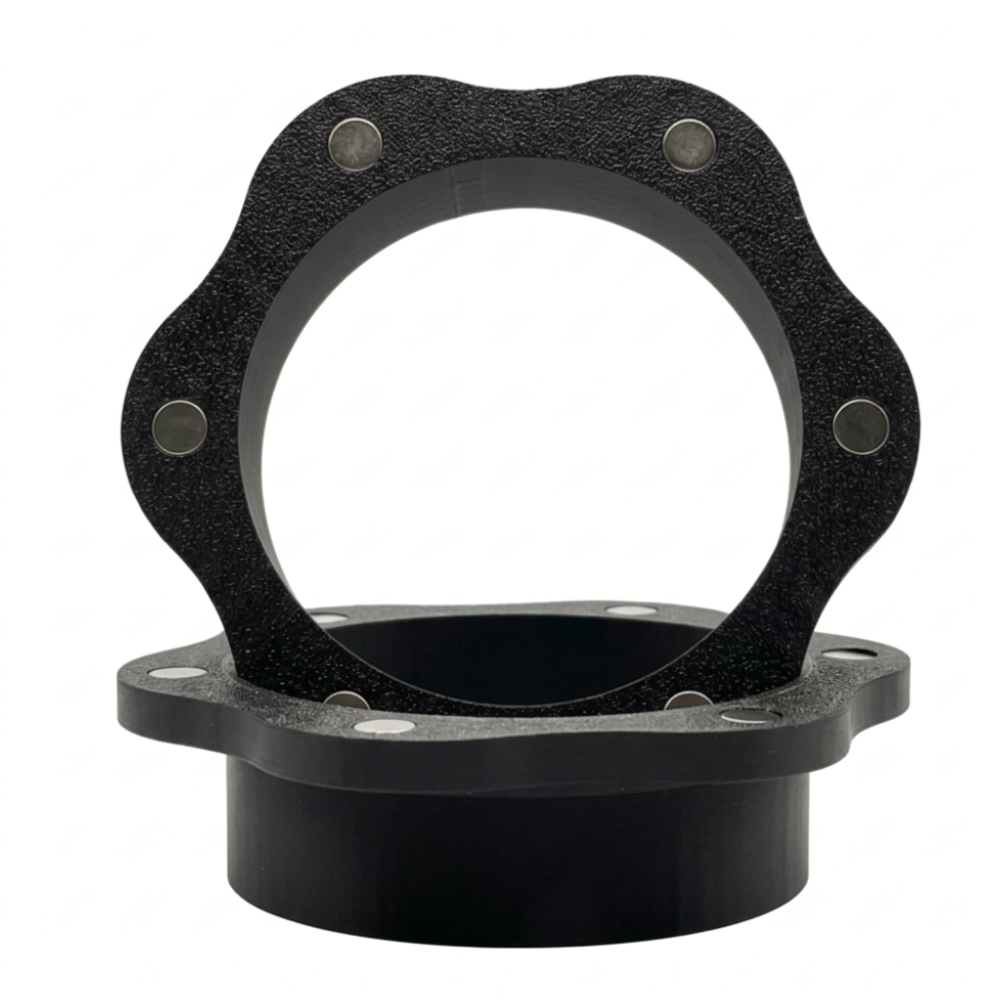
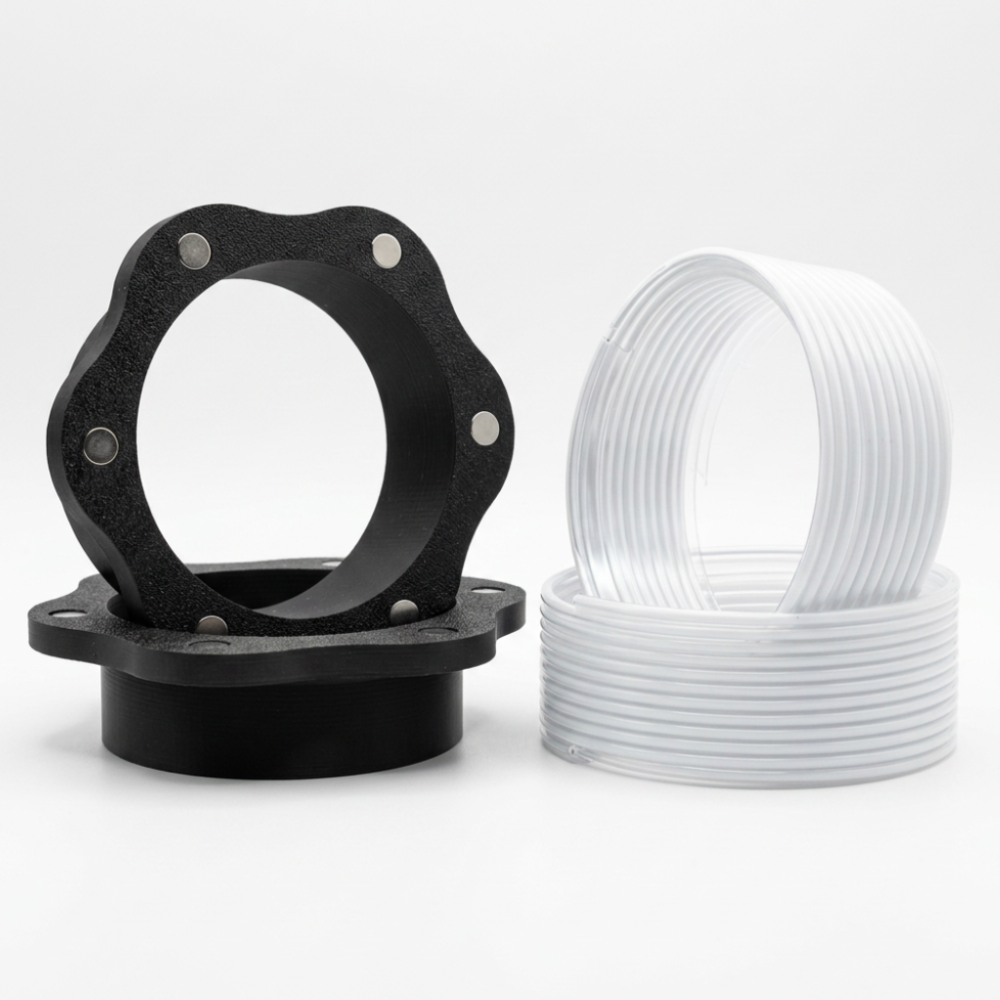
Magnetic couplers use neodymium magnets — specifically high grades like N52, the strongest commonly available. Each magnet provides a few kilograms of pull force, and a coupler uses several of them arranged in a ring so the two halves self-align as they come together.
The combined holding force is far more than the axial pull a 4" extractor exerts on a sealed joint, which is why a well-designed magnetic coupler stays put under full suction yet still separates cleanly when you pull it by hand.
Why tool-free beats clamps
A hose clamp makes a strong joint, but it is permanent in practice — nobody undoes a clamp to move a hose for five minutes. Friction-fit cuffs are quicker but loosen over time and pop off under suction. Magnetic couplers give you the best of both: a secure join and an instant release.
The practical result is behavioural. When a connection takes one second instead of a minute, you reconnect every single time instead of letting dust spill because re-clamping is a hassle.
What to look for in a coupler
Look for genuine high-grade (N52) magnets, a design sized correctly for standard 4" (100 mm) hoses and ports, and a body built to take repeated daily use. The ToolShark MAGNETITE range is engineered in CAD specifically for South African tools and dust systems and 3D-printed in Cape Town, with six N52 magnets per coupler and roughly 2.7 kg of pull force each.
Once your main connections are magnetic, adding more is just a matter of dropping in extra connectors wherever you add a machine.